
Music and dementia: how familiar songs can help us connect
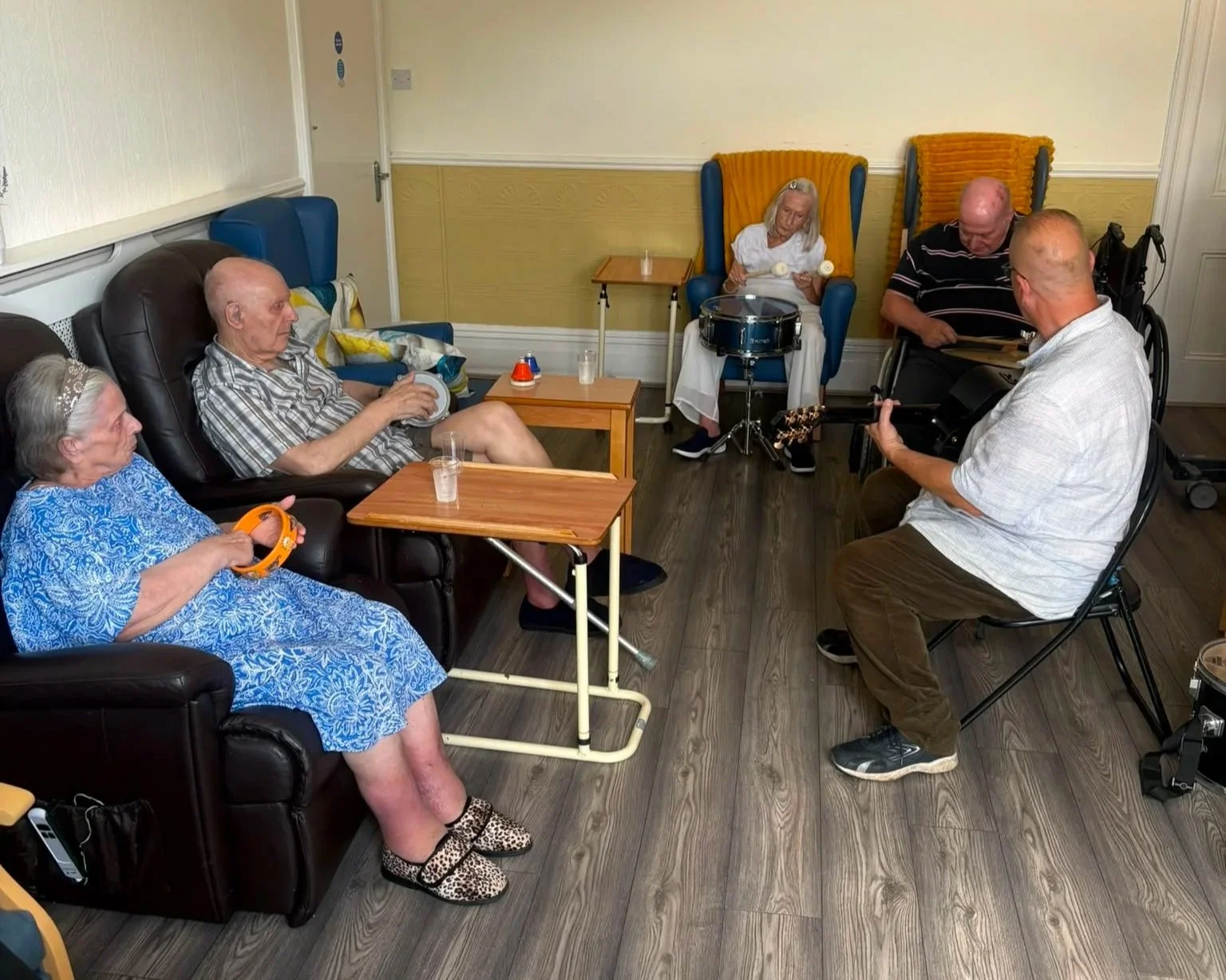
Photo taken at Marple Lodge
When someone you love is living with dementia, finding ways to connect can become more difficult. Conversations may change, and the words that once came easily may be harder to find.
Music can offer another way to spend time together. A favourite song, a familiar rhythm or the opportunity to join in can create moments of enjoyment without relying on conversation.
At Curo Care we see this as a vital element of the care we offer—through simple musical activities and the sharing of much-loved songs which can sometimes remain familiar when everyday communication has become difficult.
Joining in, one beat at a time
Music doesn't have to involve a performance or an organised singalong. Sometimes, a simple rhythm and a tambourine are enough.
One activity our residents at Marple Lodge in Stockport enjoy involves listening to a beat played through YouTube, with simple musical instruments such as tambourines available for them to join in.
We have found that this can be a calming, enjoyable experience for residents taking part. It offers a straightforward way to participate: listening to the rhythm and responding through sound and movement.
There is no need to remember lyrics or follow a conversation. The pleasure can be in the rhythm itself and in sharing an activity with other people.
The aim is enjoyment, with room for each person to respond in their own way.
When the words to a favourite song are still there
Another experience that always stays with us is hearing someone who communicates very little sing every word of a favourite song from years ago, from beginning to end.
For a family member, hearing a familiar voice singing a familiar song can be deeply moving. It can also open up a different way of spending time together, particularly when conversation has become more difficult.
Experiences like this do not mean that dementia has been reversed or that someone will find speaking easier afterwards. They show how a song can remain meaningful to an individual, even as other abilities change.
There should never be an expectation
What does research tell us about music and dementia?
Research has explored how structured music-based interventions may support people living with dementia.
A 2025 Cochrane review, drawing on 30 studies, found that these interventions probably improve depressive symptoms compared with usual care. Longer-term benefits, however, remain uncertain.
These findings relate to structured therapeutic interventions. Everyday listening, singing and playing instruments should not automatically be described as music therapy.
Music is not a cure for dementia, and people respond differently. Our observations of residents enjoying a rhythm or singing a favourite song are individual experiences, rather than a promise of a particular outcome.
Those moments of enjoyment still matter.
Choosing music that means something to the person
There is no single playlist that will appeal to everyone living with dementia. Personal taste matters.
A favourite song might be connected with dancing, a family celebration, a faith community or an artist someone has loved for decades. Some people will prefer a gentle melody; others may enjoy a lively beat.
Families can be a valuable source of ideas. Think about the music your relative chose for themselves:
● Which singers or bands did they enjoy?
● Did they have a favourite song for dancing?
● Did they sing, play an instrument or attend concerts?
● Are there songs they particularly dislike?
Alzheimer's Society highlights personal playlists as a way to use meaningful music to connect with someone living with dementia.
Knowing someone's favourites is a great starting point.
Enjoying music together during a visit
If you would like to share music with your relative, speak to the care team for any additional support. They'll be happy to share their advice and experience with you.
You could begin with one familiar song, at a comfortable volume, and simply listen together. There is no need to turn it into a memory test by asking who is singing or whether they remember the words.
Leave space for them to respond—or to enjoy listening quietly. If they appear uncomfortable, tired or uninterested, pause or stop. A previously loved song may not always be welcome, and quiet companionship has value too.
Making space for moments of connection
The experiences we see remind us why music deserves a place in everyday care. Joining a beat with a tambourine or singing a favourite song can offer a way to participate when conversation is difficult.
What matters is paying attention to the person: what they enjoy, how they respond and whether they want to take part.
If you would like to find out more about life and dementia care at our homes, please get in touch. We would love to hear about your relative, their interests and the things that make a day enjoyable for them.